sommaire
🇫🇷 version francaise 🇫🇷
analyse biomecanique du muscle-up : la velocite comme déterminant de la performance
introduction
Cette étude préliminaire vise à identifier et à analyser les paramètres temporels ainsi que les caractéristiques de vélocité spécifiques au muscle-up dans le cadre du street lifting.
CONCEPT DE VÉLOCITÉ EN BIOMÉCANIQUE :
En biomécanique, la vélocité est définie comme le taux de changement de position d’un corps par rapport au temps. Étant une mesure de déplacement, cela signifie qu’il s’agit d’une quantité vectorielle et que la vélocité doit prendre en compte à la fois la grandeur et la direction. Ainsi :
- si un corps se déplace dans une direction positive (→ ou ↑), alors la vélocité sera positive,
- si un corps se déplace dans une direction négative (← ou ↓), alors la vélocité sera négative.
LIEN ENTRE VÉLOCITÉ ET PERFORMANCE SPORTIVE :
La capacité d’un athlète à accélérer son propre corps constitue un facteur déterminant de la performance lors de l’exécution d’un muscle-up en street lifting. Les données recueillies dans le cadre de cette étude visent à établir une relation causale entre trois grandeurs mécaniques fondamentales, à savoir : la force, la vitesse et la puissance. Ces grandeurs permettent de modéliser et de comprendre les déterminants biomécaniques du geste sportif.
PERSPECTIVES ET IMPLICATIONS PRATIQUES :
Une évaluation précise et une quantification détaillée de ces paramètres revêtent une importance particulière pour les athlètes de haut niveau. Les résultats obtenus permettront :
- de mieux définir le profil force-vitesse optimal pour l’exécution du muscle-up en street lifting,
- d’affiner et de personnaliser les contenus d’entraînement en fonction des caractéristiques spécifiques des athlètes.
En conclusion, cette analyse vise à offrir une base scientifique pour améliorer la compréhension des facteurs mécaniques influençant la performance et pour développer des approches d’entraînement plus individualisées et efficaces.
méthodes et matériels
Les données collectées dans cette recherche ont été établies à partir des vidéos du premier et du deuxième essai des meilleures performances réalisées en compétition officielle de street lifting, des 5 meilleurs athlètes sur le muscle-up, issues de catégories de poids différentes. Les données collectées de mes résultats personnels ont également été incluses pour consolider les résultats à l’aide d’équipements supplémentaires.
Tous ces athlètes ont été choisis selon les critères suivants :
- les athlètes devaient avoir réalisé leurs performances et être licenciés auprès d’une fédération reconnue officiellement en street lifting par « Final Rep »,
- les athlètes devaient avoir réalisé leurs essais dans le plan sagittal,
- les athlètes devaient tous réaliser la même variante du muscle-up autorisée en compétition de street lifting,
- tous les athlètes devaient avoir une expérience en compétition officielle supérieure ou égale à 2 ans et/ou une expérience en street lifting supérieure ou égale à 4 ans.
Ont alors été retenus, les athlètes suivants :
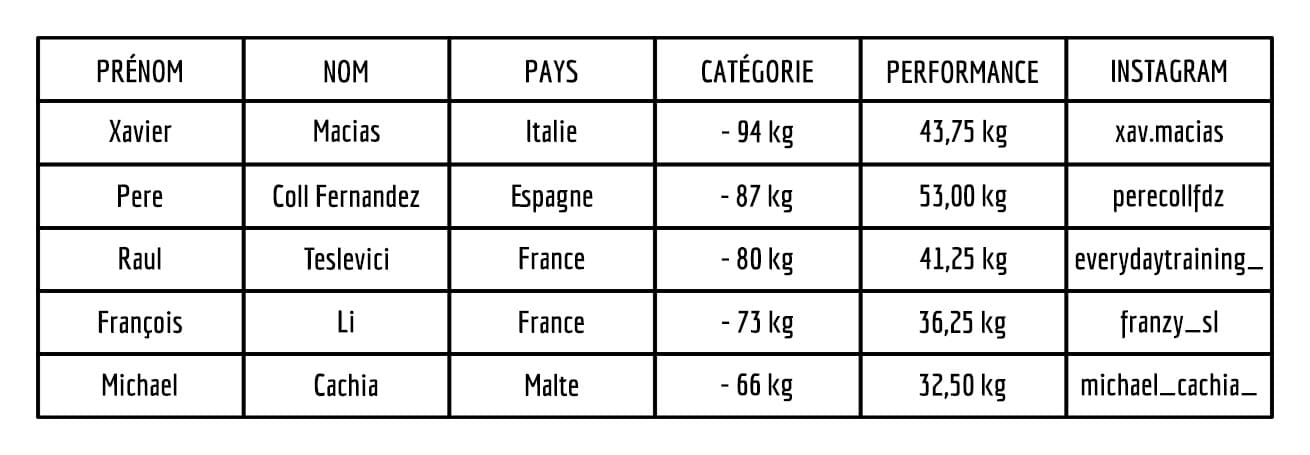
Note : tous les athlètes employant la variante deadstop du muscle-up ont été volontairement exclus de ce rapport, cela afin de ne pas fausser les données. Une seconde analyse portant alors sur l’exécution du muscle-up deadstop sera accordée prochainement.
Dans cette première étude expérimentale, j’ai évalué la stabilité et la reproductibilité des données recueillies. Pour ce faire, j’ai extrait des vidéos provenant des réseaux sociaux ou des diffusions en direct de compétitions organisées par « Final Rep », couvrant les premiers et deuxièmes essais de chaque athlète. L’analyse a été réalisée à l’aide d’une application mobile (PowerLift) et d’un logiciel d’analyse sportive (Kinovea), reconnus comme des outils fiables pour mesurer la vitesse, la distance et la trajectoire. [1, 2, 3, 4]
J’ai traité un total de 10 vidéos en utilisant comme points de repères :
- le centre de masse (COM) de la barre fixe,
- l’axe vertical et horizontal de la barre fixe,
- l’axe vertical (positif et négatif) du Centre De Masse (CdM) du système complet.
Ces analyses m’ont permis d’obtenir :
- un temps global d’exécution,
- un temps pour chaque phase du mouvement,
- des distances horizontale et verticale.
À partir de ces données, j’ai calculé une moyenne de distance, de temps global et de temps pour chacune des phases du mouvement, ce qui m’a permis, en fin de compte, d’exprimer la vélocité grâce à la formule suivante :
Vélocité = Déplacement (m) / Temps (s)
Pour valider mes résultats, j’ai utilisé un encodeur linéaire (Vitruve Fit), également reconnu comme moyen fiable et valide pour la mesure [5, 6], appliqué sur mes propres exécutions, employées à des charges correspondant aux intensités des essais en compétition. Les données obtenues ont ensuite été comparées et intégrées aux résultats subséquents.
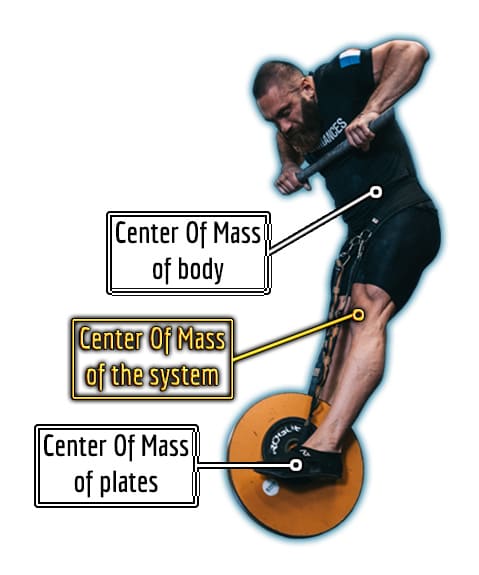
Le centre de masse ou « Center Of Mass » (COM) a été retenu comme point de repère cinématique principal pour analyser le muscle-up en street lifting en raison de sa pertinence biomécanique et de son rôle central dans l’évaluation globale des mouvements. Il représente un point unique où se trouve la masse moyenne du système complet, englobant le corps de l’athlète et la charge additionnelle. Cette approche est couramment utilisée dans l’analyse des mouvements complexes impliquant des variations significatives de force, comme en haltérophilie ou en gymnastique. [7] [8]
Étudier le « Center Of Mass » (COM) permet d’intégrer plusieurs dimensions biomécaniques essentielles :
Cinématique (vitesse et accélération) :
Le COM trace une trajectoire globale qui résume le déplacement corporel, permettant de mesurer précisément les vitesses verticales (vx) et horizontales (vy).
Puissance et Force :
La puissance produite est proportionnelle à la vitesse du COM et à la force appliquée, permettant alors de quantifier la puissance mécanique instantanée (P=F⋅v )
Analyse segmentaire :
L’analyse du COM permet de standardiser les résultats entre différents athlètes, indépendamment de leurs morphologies ou de la répartition de leurs segments corporels.
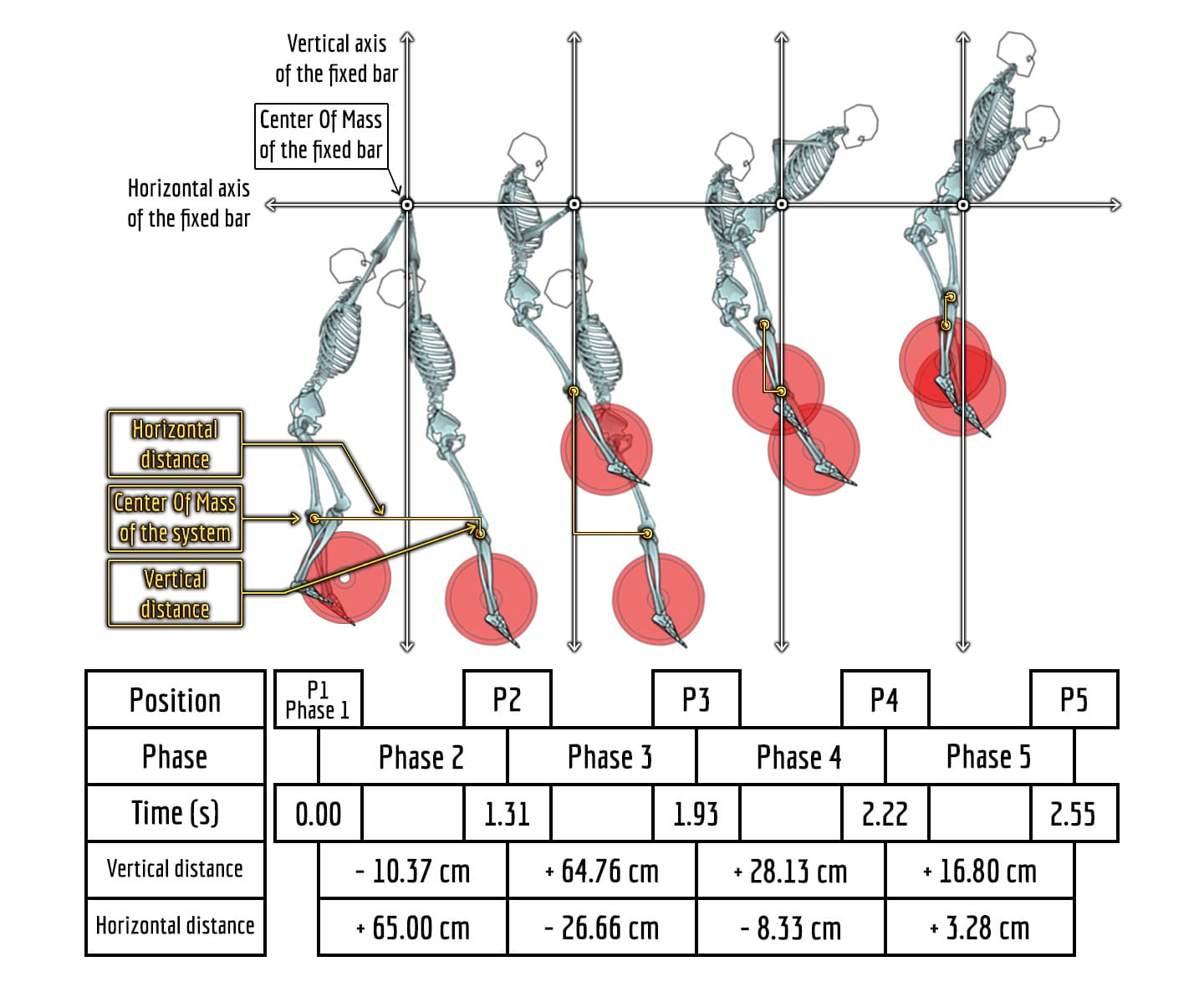
Pour cette étude, j’ai donc mesuré, en partant des 10 vidéos sélectionnées et cela, durant l’intégralité de ce mouvement, les distances à partir des repères suivants :
- l’axe vertical et horizontal du centre de masse (COM) de la barre fixe,
- l’axe vertical et horizontal (positif et négatif) du centre de masse (COM).
Ce n’est qu’en utilisant le centre de masse (COM) du système comme référence cinématique et en intégrant les distances verticales et horizontales parcourues avec les données temporelles mesurées, qu’il m’a été possible de quantifier la vélocité verticale horizontale en m/s.
résultats
Dans les tableaux ci-dessous, vous pouvez observer les résultats obtenus pour chacun des athlètes sélectionnés lors de cette étude concernant :
- le temps global d’exécution,
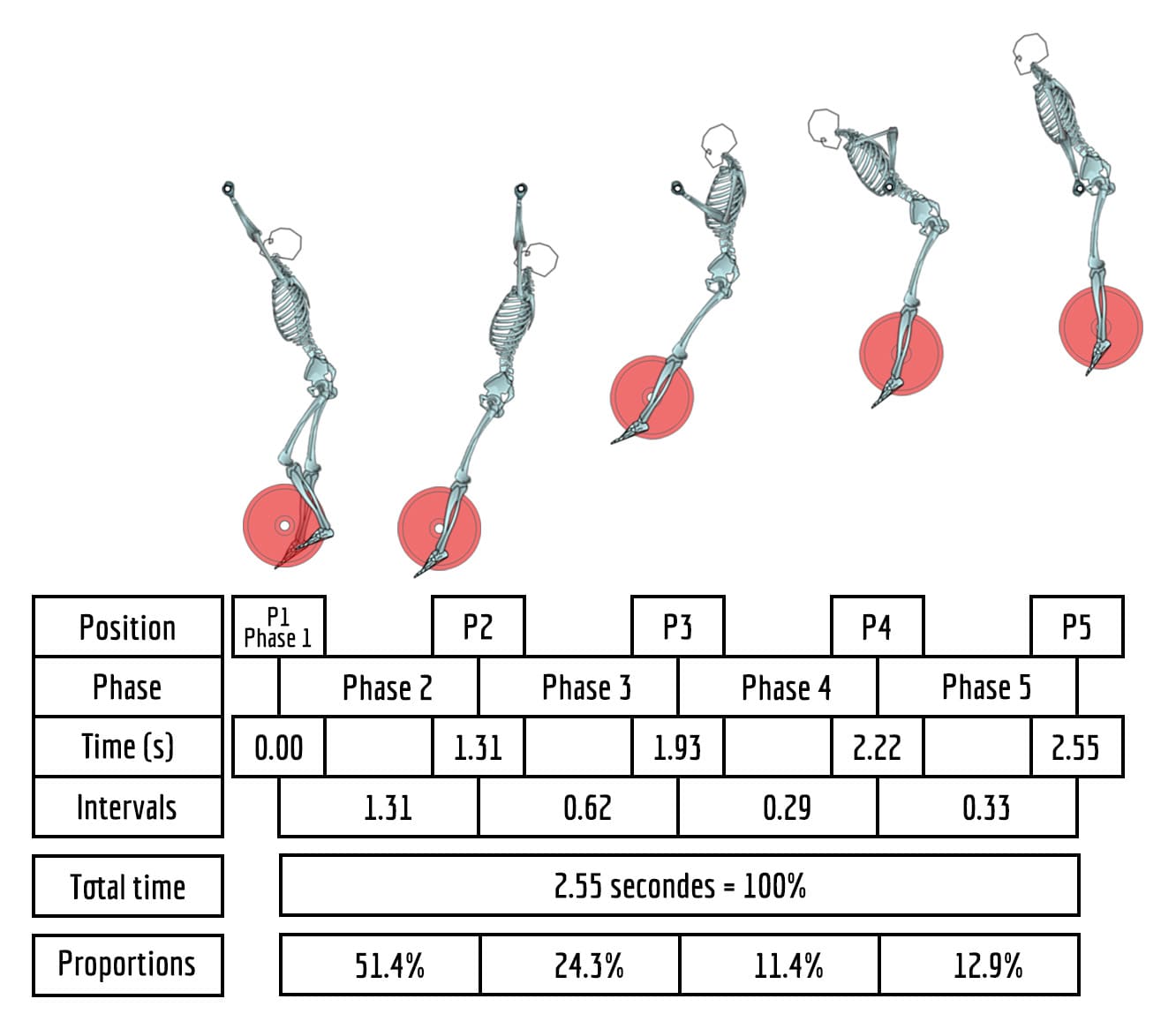
- le temps pour chacune des phases du mouvement.
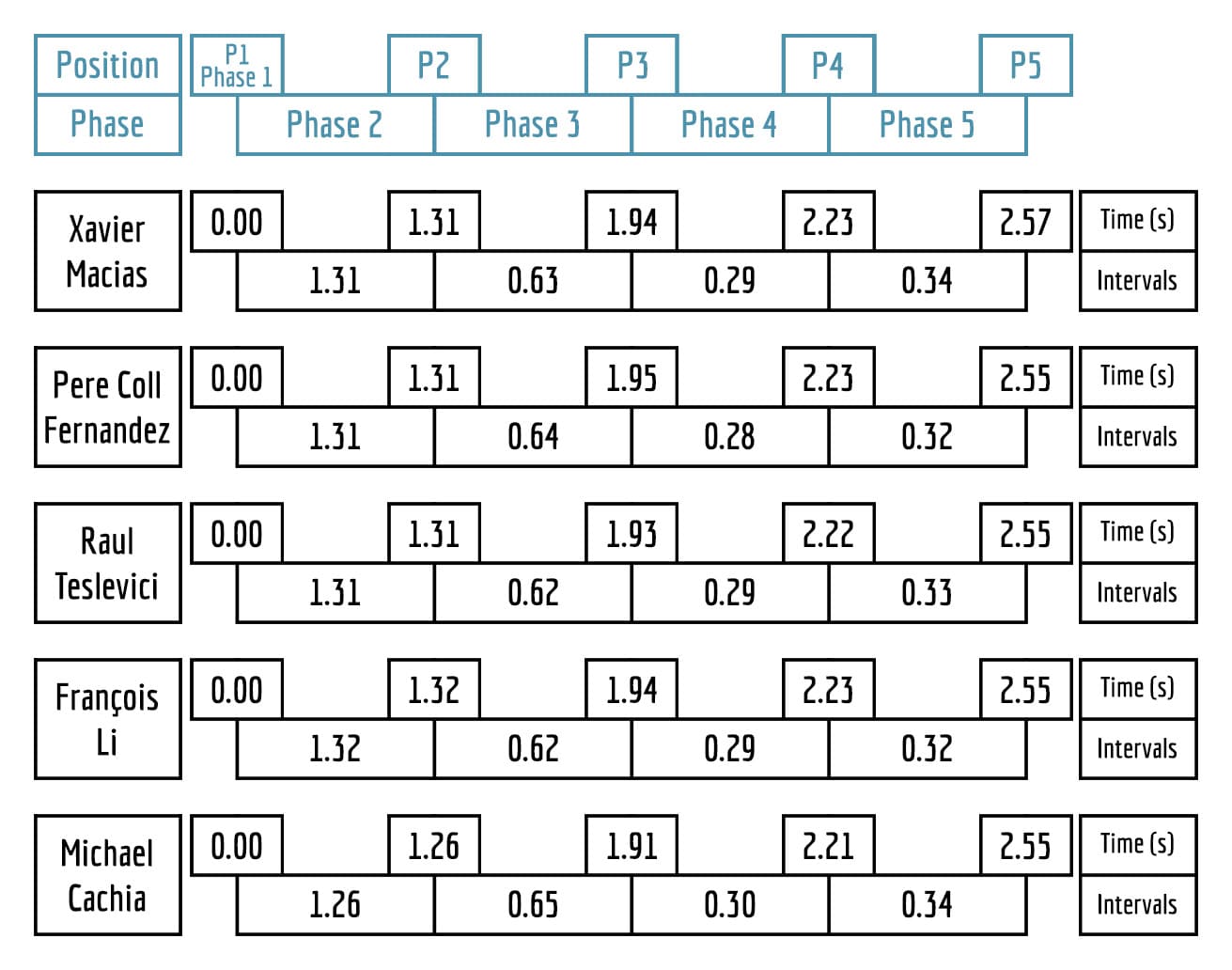
Temps moyens d’exécution du muscle-up en street lifting :
Déplacement du centre de masse (CdM) lors du muscle-up en street lifting :
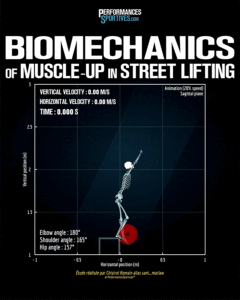
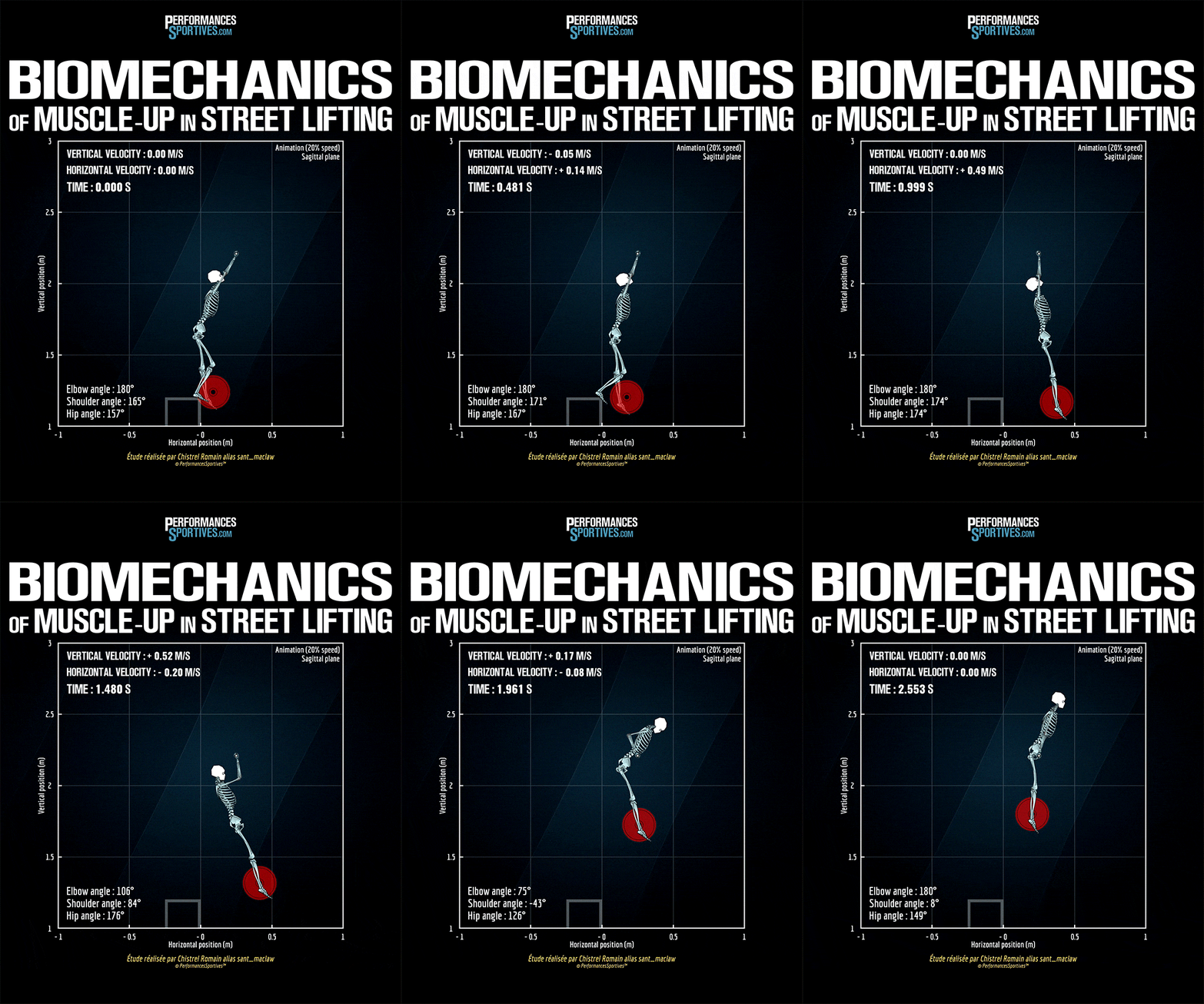
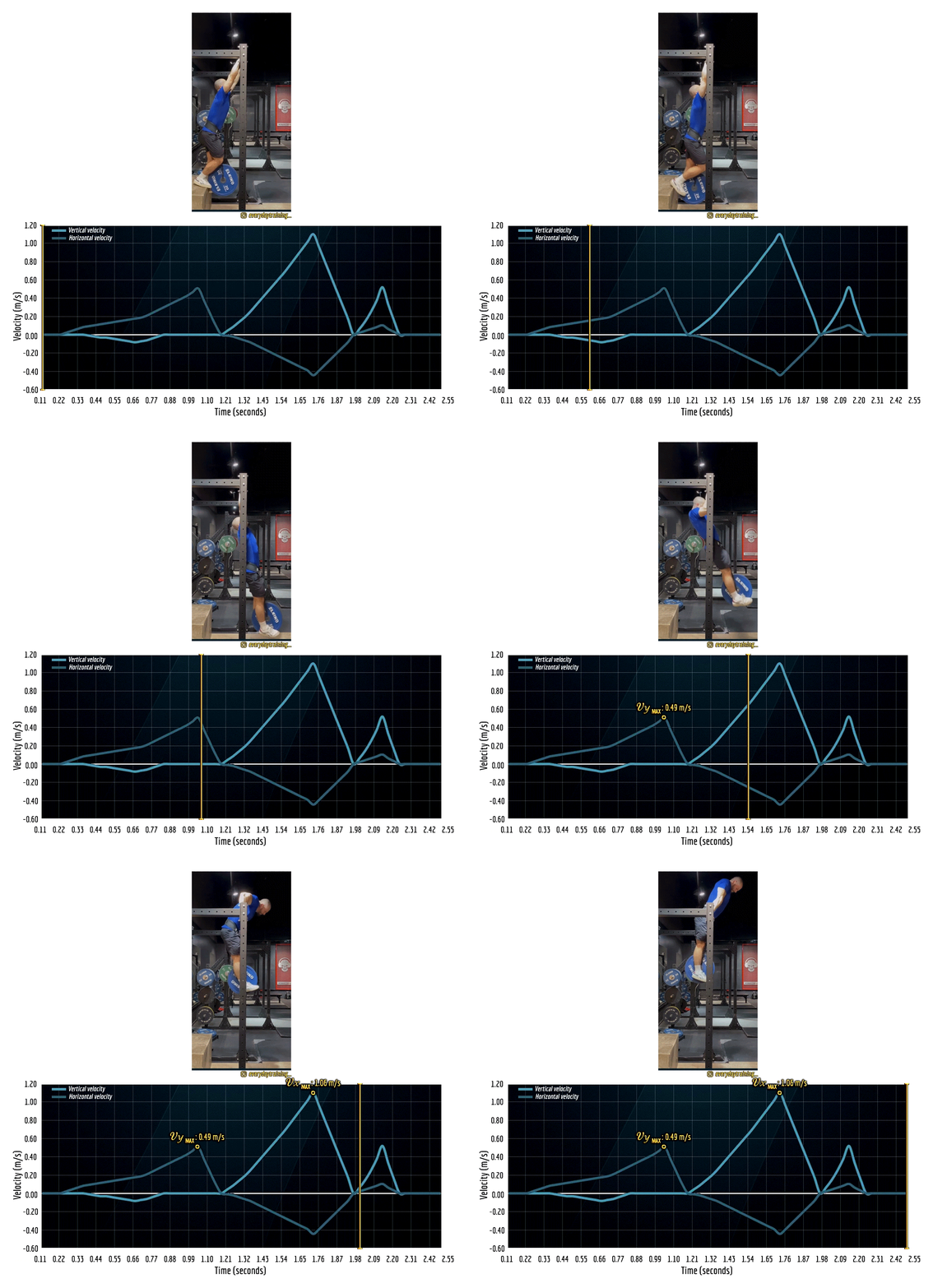
L’analyse des variations de vélocité met en évidence deux pics de vélocité, soulignant les dynamiques spécifiques des phases horizontales et verticales du mouvement.
Le pic de vélocité horizontale, enregistré à 0,999 seconde, coïncide avec la mi-distance de la phase de balancement. Ce phénomène traduit un transfert énergétique maximal au sein du système athlète-barre, permettant d’optimiser la conversion de l’impulsion initiale en une trajectoire efficace pour la transition verticale. À 1,739 secondes, la vélocité verticale atteint son maximum, marquant la phase critique du passage au-dessus de la barre. Cette accélération rapide indique un engagement maximal des fléchisseurs du coude et des extenseurs de l’épaule.
discussion
Cette étude exploratoire visait à analyser la vélocité lors de l’exécution du muscle-up en street lifting, en s’appuyant sur des données extraites des performances des meilleurs athlètes. Les résultats obtenus permettent de souligner plusieurs points clés sur les implications biomécaniques de la vélocité pour ce mouvement complexe.
Importance de la vélocité dans le muscle-up :
Les données montrent que la capacité à générer une accélération efficace est déterminante pour atteindre une exécution optimale. En particulier, les variations de vélocité observées entre les différentes phases (notamment les phases d’impulsion et de transition) soulignent la nécessité d’une coordination fine entre force et vitesse. Ces observations confirment les théories existantes liant la relation force-vitesse à la performance sportive, particulièrement dans des mouvements explosifs où le poids corporel est un facteur limitant.
Influence des caractéristiques individuelles :
Une analyse des performances des athlètes montre que des variables telles que la catégorie de poids et le niveau d’expérience influencent significativement la vélocité. Par exemple, des athlètes des catégories légères comme Michael Cachia affichent une phase initiale légèrement plus rapide, ce qui pourrait être attribué à un rapport force-poids plus favorable. Ces résultats suggèrent que les profils individuels doivent être pris en compte lors de l’élaboration des programmes d’entraînement.
Validité des outils de mesure :
L’utilisation combinée d’outils comme PowerLift, Kinovea et l’encodeur linéaire Vitruve s’est révélée fiable pour quantifier la vélocité et le déplacement. Ces outils offrent une granularité permettant d’identifier des micro-variations dans les différentes phases du mouvement, renforçant ainsi la pertinence des résultats. Cependant, les limites liées à la qualité des vidéos et à la variabilité inter-athlètes doivent être reconnues.
Implications pour l’entraînement :
Les résultats obtenus pourraient être intégrés dans une approche personnalisée de la programmation de l’entraînement. Par exemple, l’accent pourrait être mis sur des exercices visant à améliorer la vélocité dans les phases spécifiques où les déficits sont observés, comme la transition ou l’impulsion. De plus, l’identification des phases critiques offre une base pour calibrer les charges et intensités utilisées, optimisant ainsi la courbe force-vitesse.
Limites et perspectives :
Cette étude présente certaines limitations, notamment l’échantillon restreint d’athlètes et la dépendance aux vidéos disponibles. Une analyse future pourrait élargir le nombre de participants, inclure des mesures sur des variantes comme le muscle-up deadstop, et examiner les corrélations avec d’autres paramètres tels que la puissance. Ces données enrichiraient la compréhension de la cinématique et de la biomécanique du muscle-up en street lifting.
🇬🇧 english version 🇬🇧
biomechanical analysis of the muscle-up: velocity as a performance driver
introduction
This preliminary study aims to identify and analyze temporal parameters as well as velocity-specific characteristics of the muscle-up within the context of street lifting.
CONCEPT OF VELOCITY IN BIOMECHANICS :
In biomechanics, velocity is defined as the rate of change in the position of a body over time. Since it represents displacement, velocity is a vector quantity, meaning that it must account for both magnitude and direction. Therefore:
- if a body moves in a positive direction (→ or ↑), the velocity is considered positive,
- if a body moves in a negative direction (← or ↓), the velocity is considered negative.
Relationship between velocity and athletic performance :
An athlete’s ability to accelerate their own body is a key determinant of performance when executing a muscle-up in street lifting. The data collected in this study aim to establish a causal relationship between three fundamental mechanical variables: force, velocity, and power. These variables make it possible to model and better understand the biomechanical determinants of the sporting movement.
Perspectives and practical implications :
Accurate assessment and detailed quantification of these parameters are of particular importance for high-level athletes. The results obtained will make it possible :
- to better define the optimal force–velocity profile for muscle-up execution in street lifting,
- to refine and individualize training programs according to the specific characteristics of each athlete.
In conclusion, this analysis aims to provide a scientific foundation to improve the understanding of mechanical factors influencing performance and to support the development of more individualized and effective training approaches.
methods and materials
The data collected in this study were obtained from video footage of the first and second attempts corresponding to the best performances achieved during official street lifting competitions. The analysis focused on the muscle-up performances of the top five athletes, selected from different weight categories. Data derived from my own personal results were also included in order to strengthen the findings through the use of additional equipment.
All athletes were selected according to the following criteria :
- the athletes had to have achieved their performances in official competitions and be licensed by a federation officially recognized in street lifting by “Final Rep”,
- the athletes had to perform their attempts within the sagittal plane,
- all athletes had to execute the same muscle-up variation authorized in street lifting competitions,
- all athletes were required to have at least 2 years of experience in official competitions and/or at least 4 years of experience in street lifting.
The following athletes were therefore included :
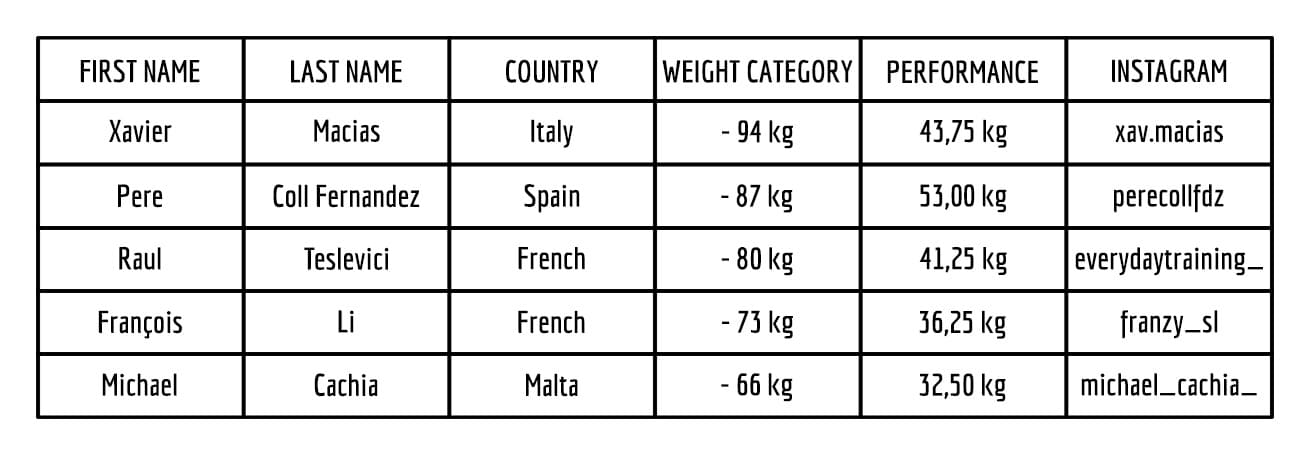
Note : All athletes using the dead-stop muscle-up variation were intentionally excluded from this report in order to avoid bias in the data. A separate analysis focusing specifically on the execution of the dead-stop muscle-up will be conducted and presented in a future study.
In this first experimental study, I evaluated the stability and reproducibility of the collected data. To achieve this, I extracted video footage from social media platforms and live broadcasts of competitions organized by “Final Rep”, covering the first and second attempts of each athlete. The analysis was conducted using a mobile application (PowerLift) and a sports motion analysis software (Kinovea), both recognized as reliable tools for measuring velocity, distance, and movement trajectory [1, 2, 3, 4].
A total of 10 videos were analyzed using the following reference points :
- the center of mass (COM) of the fixed bar,
- the vertical and horizontal axes of the fixed bar,
- the vertical axis (positive and negative) of the center of mass (COM) of the complete system.
These analyses allowed me to obtain :
- total execution time,
- execution time for each phase of the movement,
- horizontal and vertical displacement distances.
Based on these data, I calculated average values for displacement, total execution time, and phase-specific execution time. This ultimately allowed velocity to be expressed using the following equation :
Velocity = Displacement (m) / Time (s)
To validate the results, I used a linear position transducer (Vitruve Fit), which is also recognized as a reliable and valid measurement tool [5, 6]. This device was applied to my own executions, performed with loads corresponding to the intensity levels observed during competition attempts. The resulting data were then compared with and integrated into the subsequent results.
The center of mass, or Center of Mass (COM), was selected as the primary kinematic reference point for analyzing the muscle-up in street lifting due to its biomechanical relevance and its central role in the overall evaluation of movement. It represents a single point corresponding to the average mass of the complete system, encompassing both the athlete’s body and the additional external load. This approach is commonly used in the analysis of complex movements involving significant force variations, such as in weightlifting or gymnastics [7] [8].
Studying the COM makes it possible to integrate several essential biomechanical dimensions :
Kinematics (velocity and acceleration) :
The COM follows a global trajectory that summarizes overall body displacement, allowing precise measurement of vertical and horizontal velocities (vx and vy).
Power and Force :
The power produced is proportional to the velocity of the COM and the applied force, making it possible to quantify instantaneous mechanical power (P = F · v).
Segmental analysis :
COM-based analysis allows results to be standardized across different athletes, regardless of morphological differences or variations in body segment distribution.
For this study, based on the 10 selected videos, I measured the displacement throughout the entire movement using the following reference axes :
- the vertical and horizontal axes of the center of mass (COM) of the fixed bar,
- the vertical and horizontal axes (positive and negative) of the center of mass (COM) of the system.
Only by using the system’s center of mass (COM) as the kinematic reference, and by integrating the measured vertical and horizontal displacements with the temporal data, was it possible to quantify vertical and horizontal velocity in meters per second (m/s).
results
In the tables below, you can observe the results obtained for each athlete included in this study regarding :
- total execution time,
- execution time for each phase of the movement.
Average execution times of the muscle-up in street lifting :
COM displacement during the muscle-up in street lifting :
The analysis of velocity variations highlights two distinct velocity peaks, emphasizing the specific dynamics of the horizontal and vertical phases of the movement.
The horizontal velocity peak, recorded at 0.999 seconds, coincides with the midpoint of the swinging phase. This phenomenon reflects maximal energy transfer within the athlete–bar system, allowing optimal conversion of the initial impulse into an efficient trajectory for the vertical transition. At 1.739 seconds, vertical velocity reaches its maximum, marking the critical phase of the transition above the bar. This rapid acceleration indicates maximal engagement of the elbow flexors and shoulder extensors.
discussion
This exploratory study aimed to analyze velocity during muscle-up execution in street lifting, based on data extracted from the performances of top-level athletes. The results highlight several key points regarding the biomechanical implications of velocity in this complex movement.
Importance of velocity in the muscle-up :
The data show that the ability to generate effective acceleration is a determining factor in achieving optimal execution. In particular, the velocity variations observed between the different phases of the movement—especially the impulse and transition phases—highlight the need for precise coordination between force and velocity. These observations support existing theories linking the force–velocity relationship to athletic performance, particularly in explosive movements where body mass represents a limiting factor.
Influence of individual characteristics :
An analysis of athlete performance shows that variables such as weight category and experience level have a significant influence on velocity. For example, athletes from lighter weight categories, such as Michael Cachia, display a slightly faster initial phase, which may be attributed to a more favorable strength-to-body-mass ratio. These findings suggest that individual athlete profiles should be taken into account when designing training programs.
Validity of measurement tools :
The combined use of tools such as PowerLift, Kinovea, and the Vitruve linear encoder proved to be reliable for quantifying velocity and displacement. These tools provide sufficient granularity to identify micro-variations across the different phases of the movement, thereby strengthening the relevance of the results. However, limitations related to video quality and inter-athlete variability must be acknowledged.
Implications for training :
The results obtained can be integrated into a personalized approach to training programming. For instance, greater emphasis could be placed on exercises aimed at improving velocity during specific phases where deficits are observed, such as the impulse or transition phases. Furthermore, identifying critical phases provides a foundation for calibrating training loads and intensities, thereby optimizing the force–velocity curve.
Limitations and future perspectives :
This study presents certain limitations, notably the small sample size and the reliance on available video footage. Future analyses could expand the number of participants, include measurements on variants such as the dead-stop muscle-up, and examine correlations with other parameters such as power output. Such data would further enhance the understanding of the kinematics and biomechanics of the muscle-up in street lifting.
- [1] Jiménez-Olmedo, J.M.; Penichet-Tomás, A.; Villalón-Gasch, L.; Pueo, B. – Validity and reliability of smartphone high-speed camera and Kinovea for velocity-based training measurement. – Journal of Human Sport and Exercise – 2020.
- [2] Martínez-Cava, A.; Hernández-Belmonte, A.; Courel-Ibáñez, J.; Morán-Navarro, R.; González-Badillo, J.J.; Pallarés, J.G. Reliability of technologies to measure the barbell velocity: Implications for monitoring resistance training. – PLoS ONE – 2020.
- [3] Nor Adnan, N.M.; Ab Patar, M.N.A.; Lee, H.; Yamamoto, S.I.; Jong-Young, L.; Mahmud, J. – Biomechanical analysis using Kinovea for sports application. – IOP Conference Series Materials Science and Engineering – 2018.
- [4] Dæhlin, T.E.; Krosshaug, T.; Chiu, L.Z.F. – Enhancing digital video analysis of bar kinematics in weightlifting: A case study. – Journal of strength conditioning research – 2017.
- [5] Santiago A Ruiz-Alias, Deniz Şentürk, Zeki Akyildiz, Onat Çetin, Selman Kaya, Alejandro Pérez-Castilla, Ivan Jukic – Validity and reliability of velocity and power measures provided by the Vitruve linear position transducer – PLoS One – 2024.
- [6] Askow, A. T., Stone, J. D., Arndts, D. J., King, A. C., Goto, S., Hannon, J. P., Oliver, J. M. – Validity and Reliability of a Commercially-Available Velocity and Power Testing Device. – Sports (basel Switzerland) – 2018.
- [7] Garhammer, J. – Biomechanical profiles of Olympic weightlifters. – Int. J. Sport Biomech. – 1985.